A CRIME HIDDEN IN PLAIN SIGHT.
Every year, women and girls die not from war or natural disaster – but from discrimination, neglect, and unequal access to care, protection, and opportunity.
When Discrimination Becomes a Cause of Death.
It is not a single act. It is a system. Slowly. And almost always in silence.
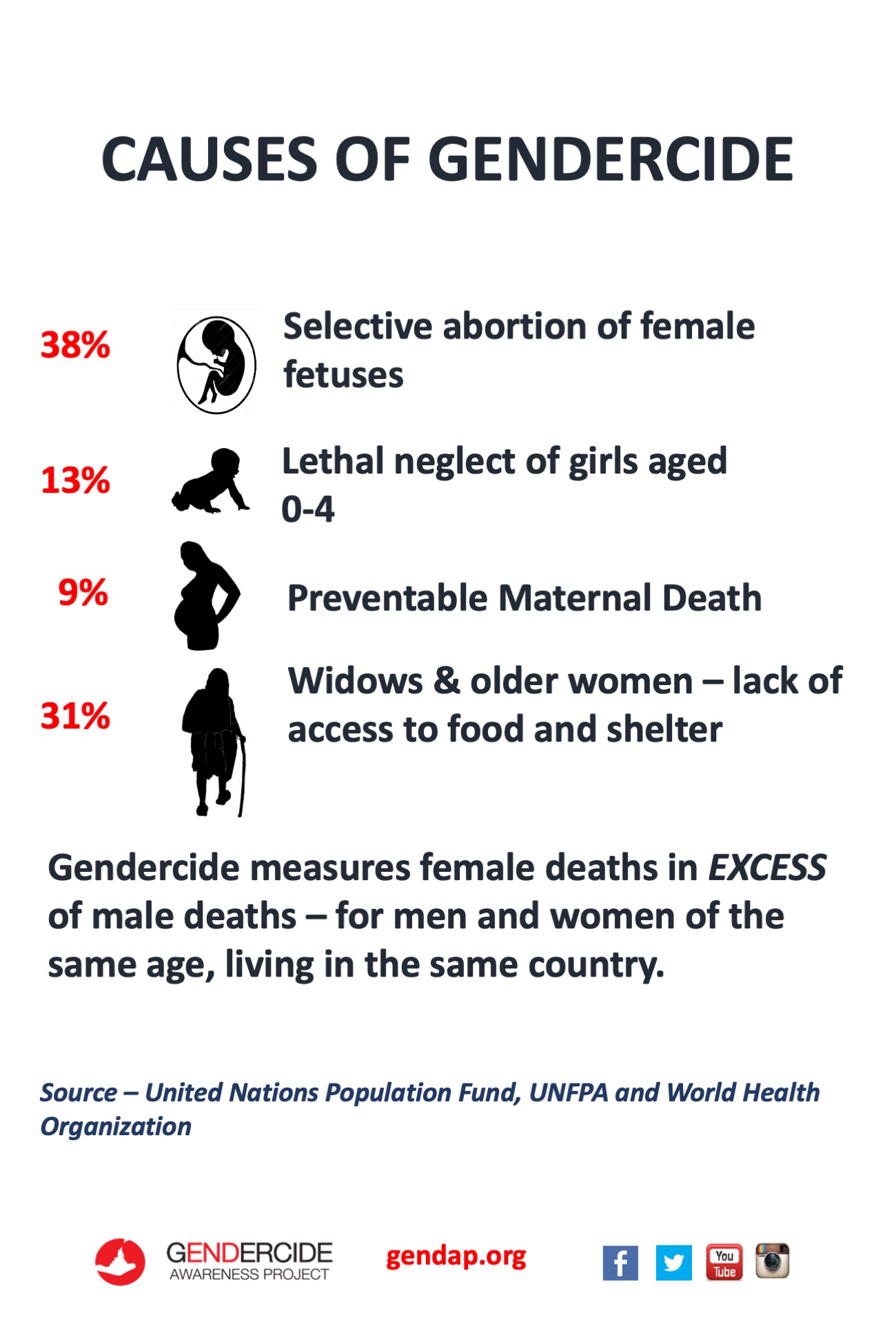
Gendercide is the death of females due to gender-based discrimination and inequality. It is not a single act of violence — it is a system of neglect, preference, and exclusion that operates across entire lifetimes and generations.
It happens before birth, in early childhood, during pregnancy, and in old age. Its victims are rarely counted. Its causes are rarely reported.
Sex-selective abortion — Female fetuses terminated because sons are valued more highly than daughters.
Female infanticide — Newborn girls killed or abandoned at birth.
Neglect of young girls — Girls denied the food, healthcare, and education routinely given to their brothers.
Preventable maternal death — Women dying in childbirth from conditions that are entirely treatable with access to basic care.
Failure to survive — Older women, especially widows, dying prematurely because they cannot access food, shelter, and medical care as effectively as men. This category is the least reported — and among the largest.
Gender-based violence — Femicide, honor killings, and violence rooted in the belief that women’s lives are expendable.
“Gendercide doesn’t always look like violence. Sometimes it looks like a door that was never opened.” — GENDAP
More Deaths Than Both World Wars Combined.
This is not a crisis of the past. It is ongoing — measured in millions, every year.
20 Million
Deaths
World War I
70 Million
DEATHS
WORLD WAR II
143 Million
WOMEN AND GIRLS
ELIMINATED
Not through war. Not through disaster. Through discrimination.
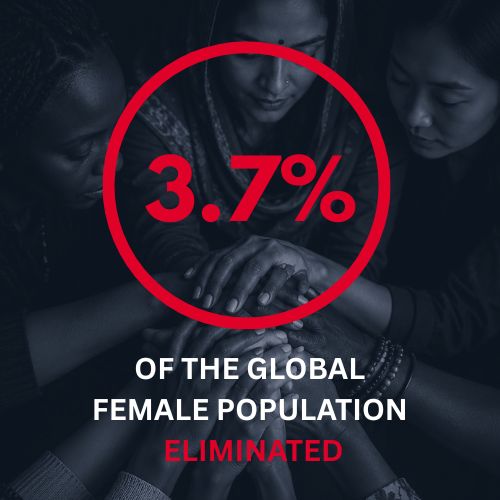
That’s 3.7% of the global female population — gone.
Sources — United Nations Population Fund, State of World Population (SWOP) 2020
World Health Organization, UNODC report 2018,
Prof. Christophe Guilmoto, SWOP 2020 author (Personal communication)
The Losses Happen Across an Entire Lifetime.
Not just at birth — and not just to girls.
One of the most persistent misconceptions about gendercide is that it primarily affects girls. In reality, losses are distributed across the full female lifespan — and the categories that receive the least media coverage account for some of the largest shares.
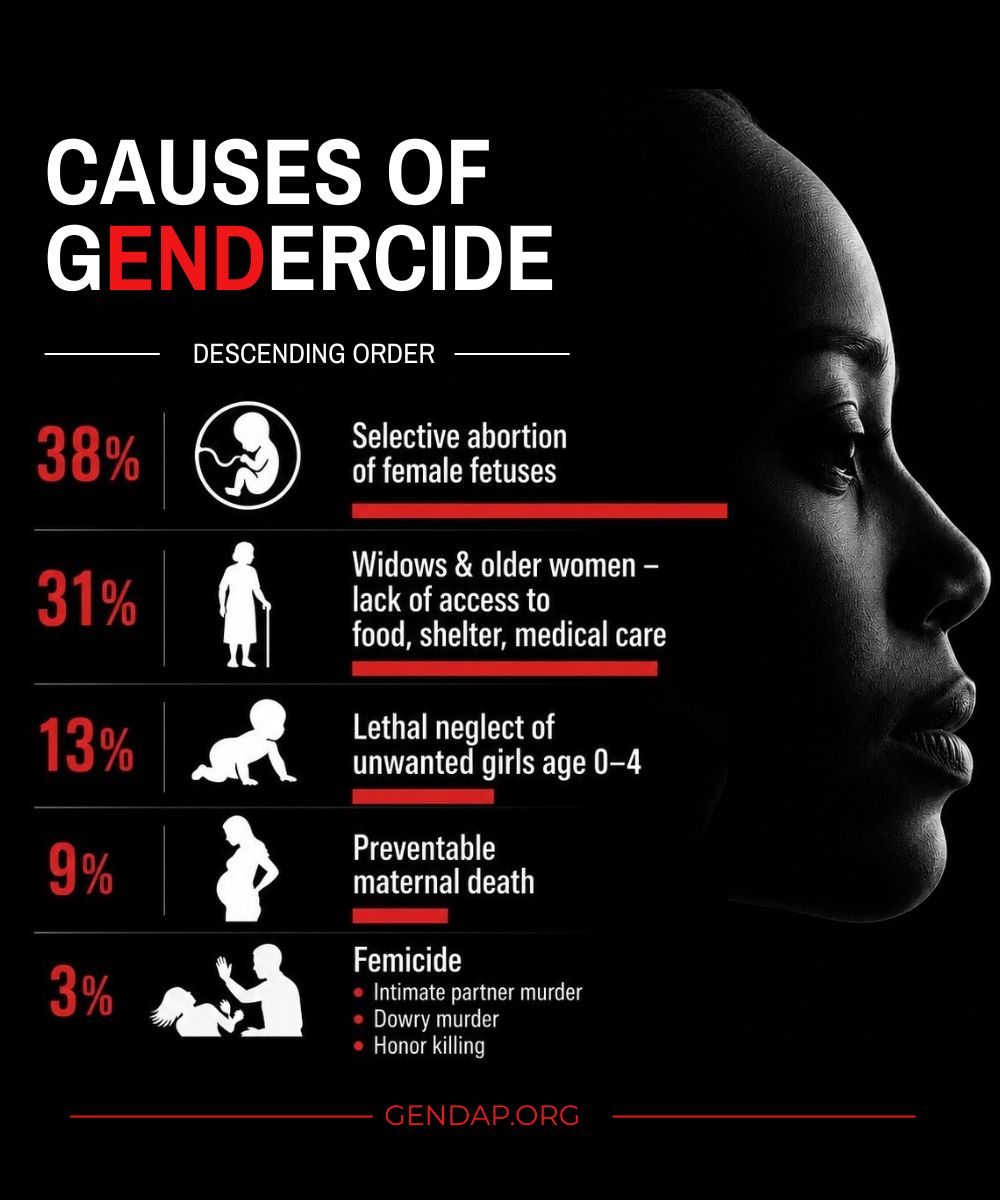
Sex-selective abortion
Female fetuses terminated due to son preference — the most visible category.
Failure to survive
Older women dying prematurely because they cannot access food, shelter, and medical care as effectively as men. This category is rarely reported because these deaths cannot be directly observed — only detected through population data.
Post-birth neglect
Girls who survive birth but are denied the nutrition, healthcare, and care given to their brothers.
Preventable maternal death
Women dying during or after childbirth from conditions that basic medical care could prevent.
Note on sourcing: These breakdowns are derived from demographic modeling frameworks developed by Amartya Sen and expanded by researchers Stephan Klasen and Claudia Wink. They represent estimates of proportional cause distribution, not precise annual counts. GENDAP presents them as a framework for understanding the issue, not as precise statistics.